◷
Opening hours
Maps listed 10:00–17:00 daily on 25 October 2026. Goa Tourism describes sunset views, but that does not confirm access after the listed closing. Check management before travelling.
Vagator · Bardez · North Goa
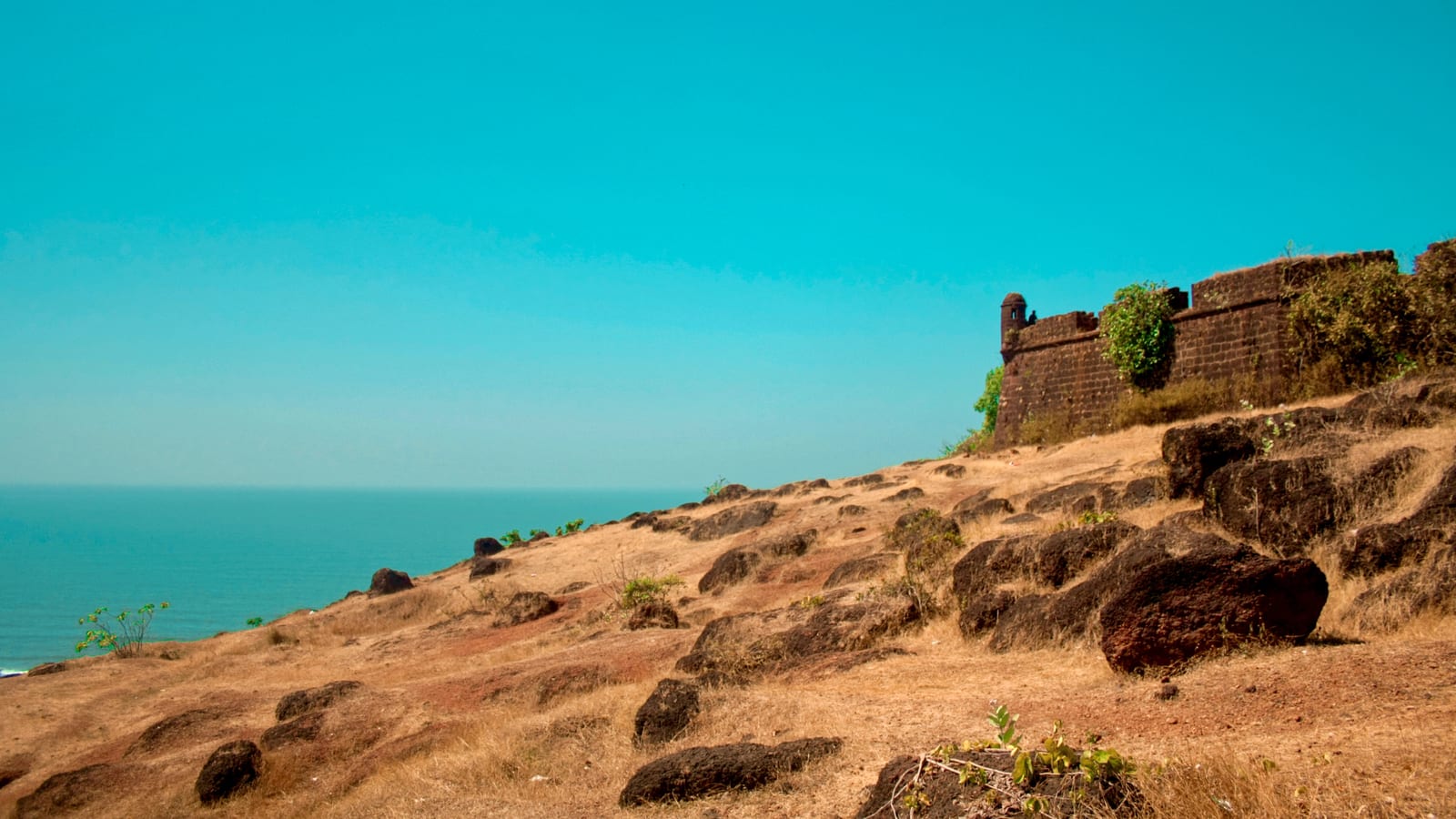
Chapora Fort is a historic fort in Vagator, Bardez, North Goa, India, on a hill above the Chapora river, the Arabian Sea and Vagator beach — where laterite ramparts meet history and the sea horizon.
About the fort
Location: Chapora Fort is a historic laterite fort in Vagator, Bardez, North Goa, India. Area: India → Goa → Vagator / Chapora → Chapora Fort.
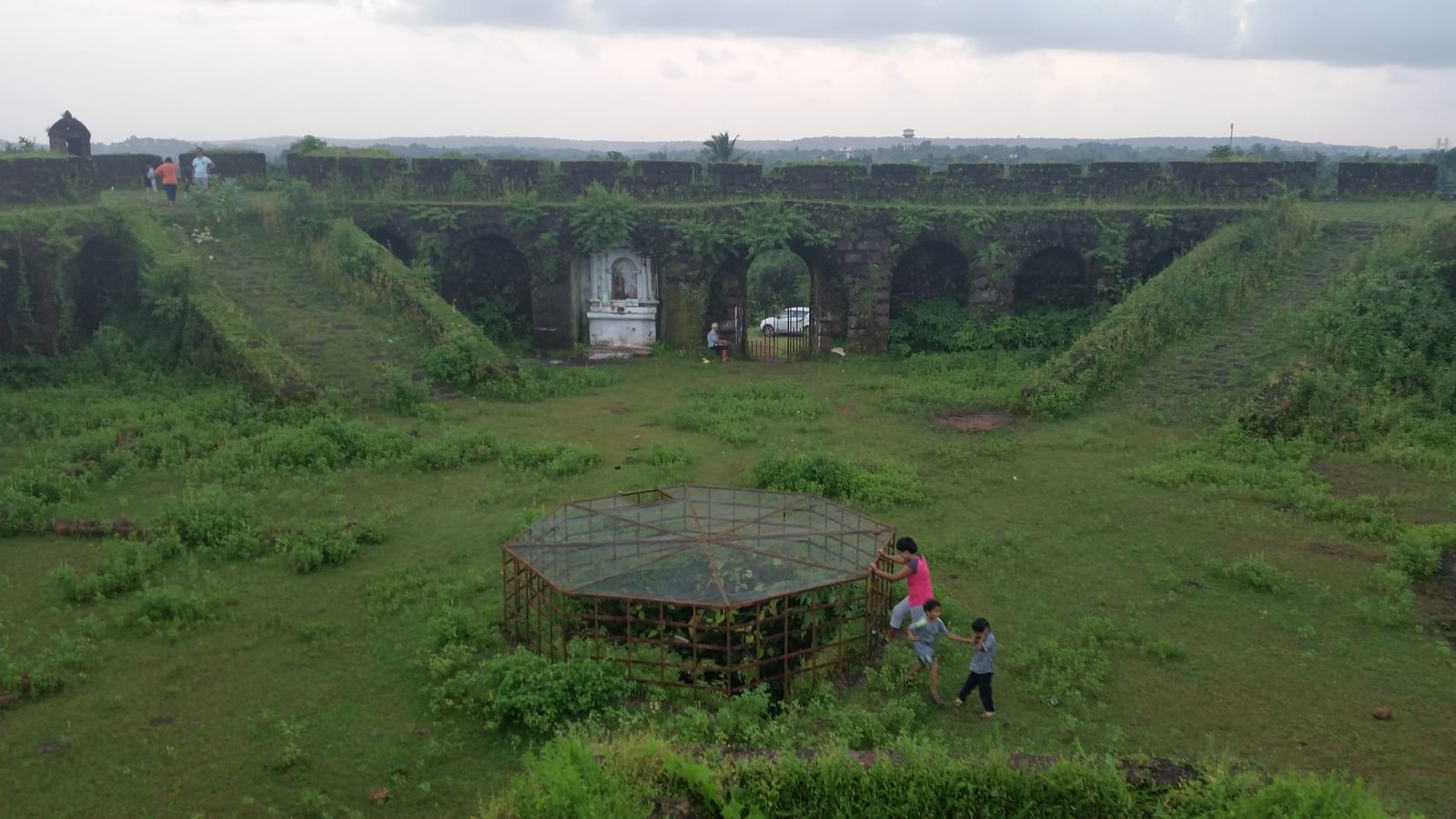
Chapora Fort stands on a high hilltop near the mouth of the Chapora river, in Bardez. The Government of Goa dates Portuguese construction over an earlier structure to 1617. Goa Tourism separately describes rebuilding in 1717; the walls follow the natural slopes, with irregular bastions and deep emplacements for cannons.
The Portuguese used the fort on the remains of an earlier Adil Shahi military post. Marathas took it in 1684 and 1739; in 1717 the Portuguese rebuilt it and added underground passages. As the northern border moved on, its military importance fell and it was abandoned in 1892.
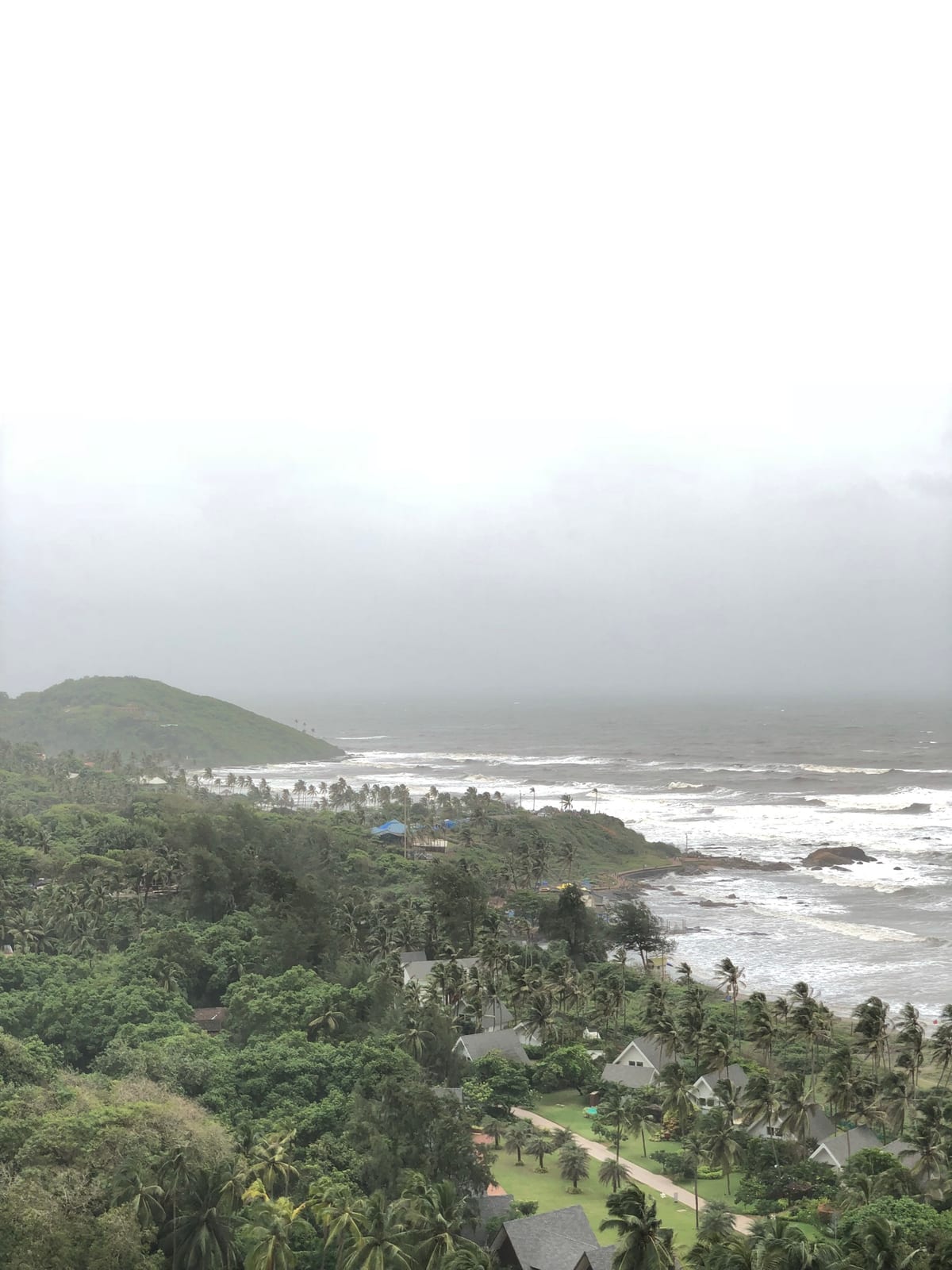
Today few buildings remain inside; the main experience is the ramparts, the open plateau, the Chapora river mouth, the Vagator–Anjuna beaches and the Arabian Sea sunset.
Visit planning
Maps listed 10:00–17:00 daily on 25 October 2026. Goa Tourism describes sunset views, but that does not confirm access after the listed closing. Check management before travelling.
The linked primary pages do not state a current admission price. An omitted fee does not establish free entry; check admission and other charges locally.
Confirm current authorised parking, charges and the final approach locally. No space is guaranteed.
Choose a manageable visit during confirmed opening hours. Allow time for the climb and breaks; carry water and suitable footwear.
Weather & planning
Climbing, views and sunset all depend on the weather. The hilltop includes exposed areas; check current access and weather before you go.
Check actual access and weather before selecting a visit.
In hot conditions, carry water and sun protection and shorten exposed sections.
In wet or stormy conditions, assess the actual route and follow official local warnings.
Snapshot conditions
Seven dates in the snapshot
Sunrise / sunset: AM 6:29 – PM 6:07 · UV for the first date 7.2.
Static build snapshot; it does not refresh in your browser. Check a current official forecast. 2026-10-26T10:00 · Asia/Kolkata (UTC+5:30). This is a weather forecast — actual conditions may differ. Check the latest forecast before travelling.
Seasonal visit planning
These are conditional planning scenarios, not measured climate averages or current coastal safety reports. Check current official weather and local access instructions.
| Season / period | Weather & temperature | Sea / water | Wildlife / nature | Visit recommendation |
|---|---|---|---|---|
| Heat and sun | Check current temperature and UV. | A warm day is not a swimming-safety assessment. | Observe nature from permitted paths. | Carry water, use sun protection and shorten exposed sections. |
| Rain and thunderstorms | Check official warnings and actual wet surfaces. | Follow beach authority and lifeguard instructions separately. | Do not enter unmarked areas to seek wildlife. | Seek substantial shelter during lightning and reconsider exposed sections. |
| Wind and visibility | Assess current wind and visibility before continuing. | A wave-height model does not confirm safe bathing. | No wildlife sighting is promised. | Keep clear of exposed edges and follow local instructions. |
| Cooler conditions | Choose layers using the actual forecast. | Coastal access and flags remain separate checks. | Respect habitats and other visitors. | Adapt your route and breaks to your group rather than a calendar guarantee. |
A forecast does not establish swimming safety, monument opening or the condition of a path.
Getting here in detail
Chapora Fort is close to Vagator, Anjuna and Mapusa. Check the actual approach and current access before choosing transport.
Distances are approximate; actual time varies with traffic, season and road — check live traffic in maps.
Check the current road journey from your actual airport. Arrange the permitted drop-off and return with your transport provider; no direct service or fixed travel time is guaranteed here.
Use the station named on your ticket as the starting point. Check current onward transport, the last walking section and the return arrangement.
Goa Tourism describes a Mapusa–Anjuna–Vagator bus connection. Its undated destination page is not a timetable: confirm the current route, stop, frequency and return service with the operator.
Agree a lawful drop-off, parking and return meeting point before relying on a vehicle reaching the approach. The map pin is the fort, not a guaranteed vehicle entrance.
From the base parking/road the path up to the fort is short but steep. There is little shade on hot days; carry water, keep hands free and avoid slippery footwear. In monsoon the laterite rock and soil can be slippery — wear sturdy footwear.
Visitor facilities
Ask about the current location and availability of toilets before setting out. Do not assume verified provision or absence inside the fort or nearby.
Ask locally about authorised parking, charges and the final route to the climb. No space is guaranteed.
Check the selected venue’s current opening, prices and hygiene when arranging food. Carry water.
Check the exact property, booking terms and journey to the fort. This is not a verified accommodation directory.
Do not rely on a shop being open or a product being available; obtain essentials in advance.
Check your provider’s current fuel or charging information before travelling. No nearby charging point has been verified here.
Check your bank and seller’s current arrangements before relying on an ATM or digital payment.
Prepare for personal medical needs. Seek local staff and current emergency-service assistance when needed.
Download a map ahead of time. Mobile reception and internet availability at the fort have not been surveyed by this guide.
Carry drinking water. Do not assume a refill point, seating or shade will be available.
Location
Chapora Fort Trail, Vagator, Anjuna, Chapora, Goa 403509 · Plus code JP3P+VQ Vagator, Goa, India · coordinates 15.6046375, 73.7369631
Around the fort
Chapora Fort sits close to Vagator Beach and Anjuna Beach; consider them as separate visits after checking current access and the journey.
The crescent beach seen below the fort. Check the actual route and access before visiting the beach.
The famous North Goa beach stretch seen south of the fort. Treat it as a separate coastal visit and plan the journey.
North of the fort the river meets the Arabian Sea. This geography helps understand the fort’s old border-defence role.
Local flavours around
Around Vagator–Chapora–Anjuna you find seafood, vegetarian thali, Goan curry-rice, poi, shakuti and bebinca. Choose the actual venue by its current information; this guide does not verify an individual restaurant.
Itineraries
Science & heritage
Government of Goa and Goa Tourism describe the red laterite fort. Observe the material without scratching or removing stone.
Goa Tourism describes walls following the peninsula’s slopes, irregular bastions and cannon embrasures. Its account of the 1717 rebuilding is distinct from the government’s 1617 construction date.
Observe vegetation from permitted paths without disturbing habitats. No particular wildlife sighting is promised by this guide.
Visitor responsibility
This guide is non-commercial and educational. The fort is ancient heritage — its sustainable appreciation and safety are everyone’s responsibility.
Stories and lore of the fort
Records note that under the Adil Shahi (Bijapur Sultanate) this place was known as “Shahapura” — meaning “king’s town”. Over time the name shifted in local pronunciation to “Shapora / Chapora”. The Chapora river and the hill above its mouth share this name, as found on the official Goa Tourism Development Corporation (GTDC) page.
Source: Goa Tourism Development Corporation (GTDC) – Chapora Fort
Per official Goa Tourism information, Marathas took the fort twice, in 1684 and 1739. Later, in the 1741 campaign known as the “New Conquests” (Novas Conquistas), the Portuguese retook it and brought the northern Pernem region closer. From then the Portuguese border in Goa moved north beyond the Chapora river, which is why the fort lost its main border-defence role; in 1892 it was abandoned militarily.
Source: Goa Tourism Development Corporation (GTDC) and Government of Goa
Local tradition tells that during the 1684 attack, Sambhaji Raje’s soldiers used large monitor lizards to climb the fort. The Portuguese commander, astonished at the trick, is said to have handed over the fort without firing a shot. This mention is on Goa Tourism’s official page too, but it should be read as a traditional tale.
Source: Goa Tourism Development Corporation (GTDC) – traditional tale
The final scenes of the 2001 Hindi film “Dil Chahta Hai” were shot on this very fort. After that the fort became famous across India and abroad as the “Dil Chahta Hai Fort” and a new generation got to know the place. Today Goa Tourism presents it as film-culture heritage.
Source: Goa Tourism Development Corporation (GTDC) / Wikipedia note
In 1717 the Portuguese carried out a major rebuild — ramparts following the hill slope, bastions at irregular spacing, deep emplacements for cannons and cylindrical towers on the bastions. Around the same time a special emergency underground path to the river was made; in a siege it was used to bring supplies or retreat, as noted. The entrance to this path is still visible inside the fort.
Source: Goa Tourism Development Corporation (GTDC) / Wikipedia note
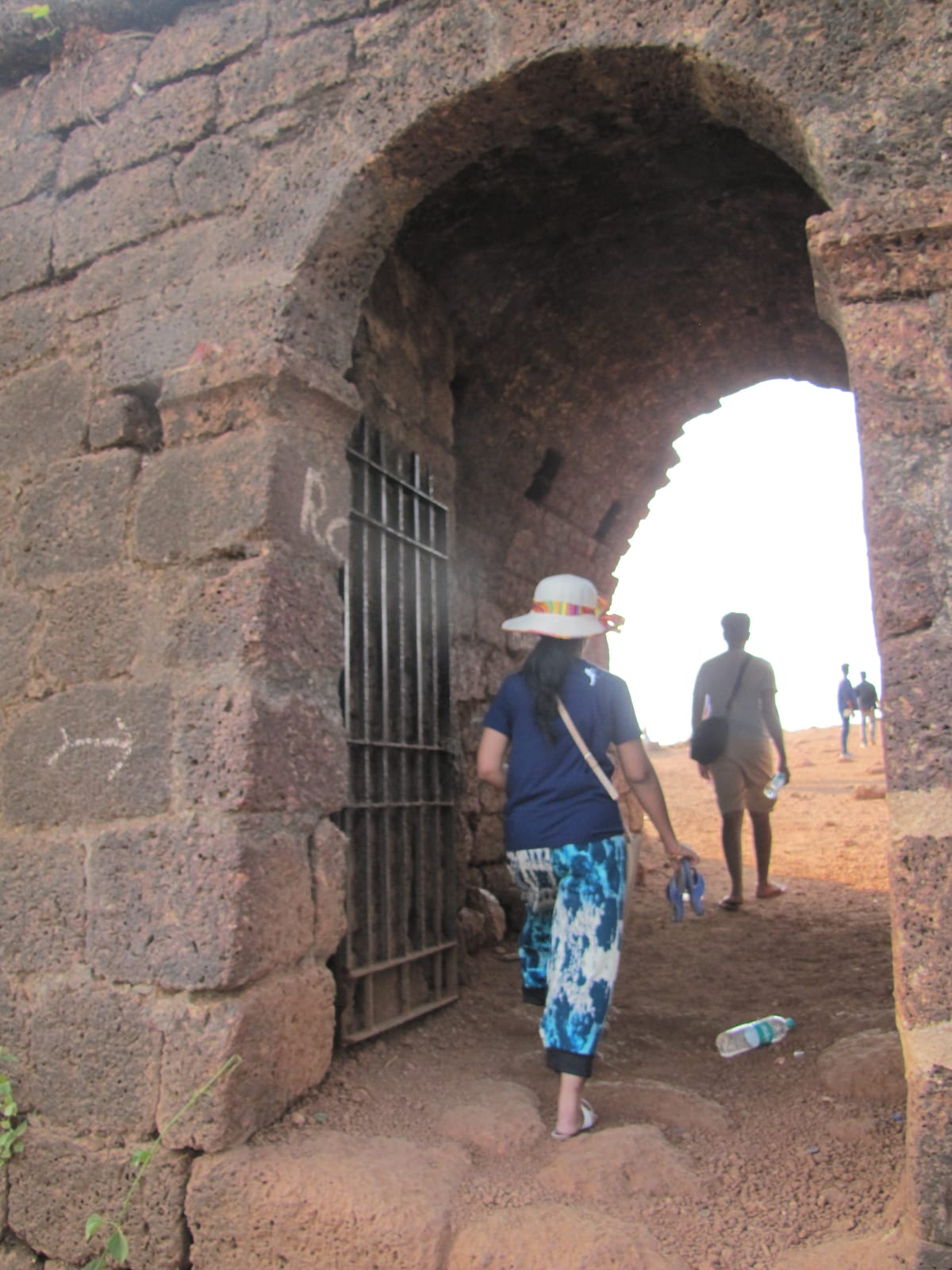
The fort ramparts are of red laterite — a regional stone common in Goa that hardens in the monsoon. Once quarried it hardens in air, which made it easy for old construction. On hot days the stone heats up and can be slippery when damp — caution on the climb steps is good.
Source: Goa Tourism Development Corporation (GTDC) – architecture note
The fort sits on a high hilltop by the Chapora river mouth, so from one spot you see the Arabian Sea, the Vagator–Anjuna coastline and both banks of the river. In the Portuguese period this sightline mattered for watching the northern border; today it is the visitors’ best sunset spot.
Source: Goa Tourism Development Corporation (GTDC) / geographical note
Some stories are based on tradition and new research may change them. The above is compiled from primary/official sources; the full list is in the “References” section at the bottom of the page.
Common questions
Goa Tourism describes evening and sunset views, but Maps listed 10:00–17:00 daily when checked on 25 October 2026. This does not establish sunset admission. Confirm current entry and closing before travelling.
Choose a few features around your interests and leave time for the climb and breaks. Your pace, current access and weather determine the visit length.
The linked government and Goa Tourism pages do not state a current admission price. Absence of a price is not confirmation of free entry; check current admission and separate service charges locally.
Ask about current authorised parking, fees and the walking section before relying on a space. This guide has not verified a particular car park.
Use the exact fort map and check the current approach from your starting point. Goa Tourism describes the Mapusa–Anjuna–Vagator bus connection, but its undated description is not a current timetable.
Do not assume a step-free route. Ask management about the actual climb, surfaces and suitable access for your group before setting out.
Ask about current facilities before relying on toilets, drinking water or seating. Carry drinking water; this guide does not establish that facilities are present or absent.
Use the Facilities section as a planning checklist, not a verified business directory. Check the chosen provider’s exact location and current service.
Chapora Fort is in Vagator, Goa state, India. It is in Bardez taluka, near the mouth of the Chapora river.
No current admission fee was verified from the primary pages. Do not interpret an omitted fee as free entry. Confirm admission and other charges locally.
Nearby beaches like Vagator Beach and Anjuna Beach are visible; the Chapora river mouth and the Arabian Sea sunset are also seen from the fort.
Check the current journey from your actual airport and arrange a permitted drop-off and final approach. No fixed distance, direct service or travel time is promised here.
Wet stone, wind and poor visibility can affect a hilltop visit. Check current official warnings and local access instructions; a weather model does not establish a closure or safe route.
References
The information in this guide is compiled from the following public, non-commercial sources:
Chapora Fort – official destination page
Department of Tourism – North Goa destinations
Chapora Fort, Vagator, Goa — location & ratings
Some mentions are based on tradition and new research may change them.
Last edited: 2026-10-25 · This guide is independent, non-commercial and educational.


